Partnered post
Who doesn’t like knowing juicy secrets?
Well. Let me let my readers in on one: One of my best buddies, the talented (and once voted as one of Metro Manila’s cutest chefs or something like that – totally blocked it out of my memory) Chef Jonas Ng of James and Daughters has a secret.
I’m talking about his hidden wine menu, of course. 😉
They have a pretty robust list available upon request… and his selection can definitely knock the socks (or other articles of clothing) off your Valentine’s Day (or the day before… or after… No judgments) date. It can be daunting, so I’ve taken the liberty to talk about my favorites (boy there’s a lot), and why I love them. Some reasons may have some technical aspects, but I’ll break them down as much as I can (aka, this is not the article for wine snobs) for easy ordering.
The Wine: Les Fiefs de Lagrange Saint-Julien
Why: I love the château’s history (it dates back to the Middle Ages). It’s the second growth of the legendary Château Lagrange, which means it’s a wallet-friendly way to try the château’s wine. It’s got a high percentage of Cabernet Sauvignon (typical of the Saint-Julien appellation), which means it’s got enough power and acidity to pair with one of my James and Daughters staples, the crispy pork belly.
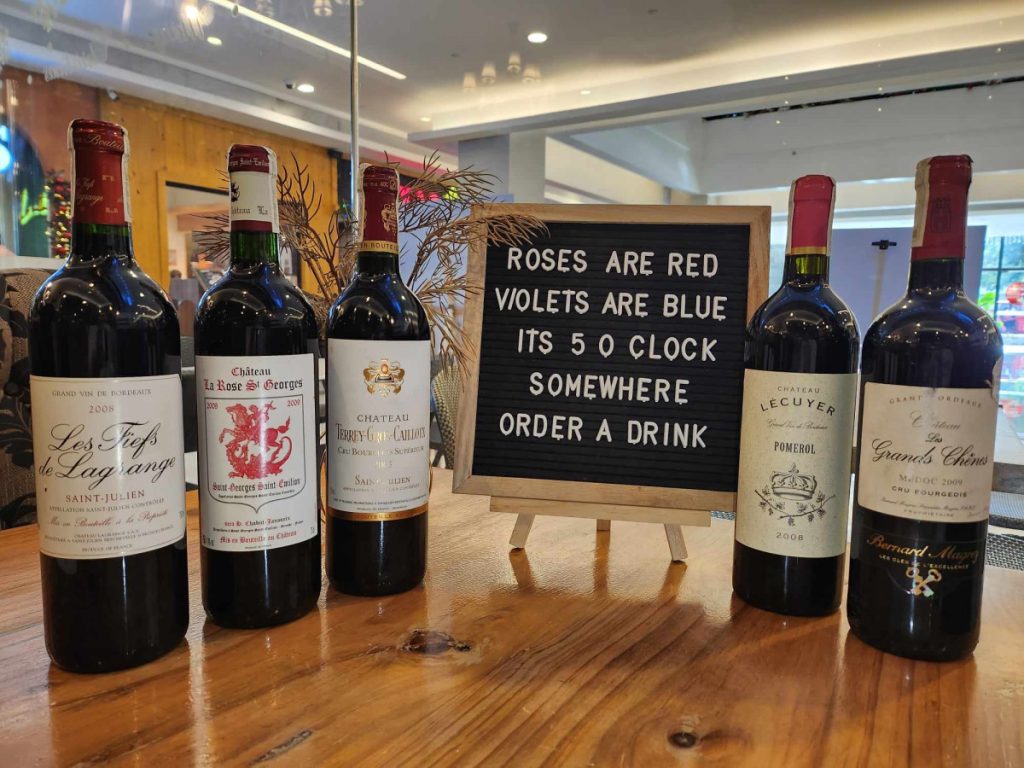
The Wine: Château La Rose St-Georges, St-Georges Saint-Émilion
Why: I love Saint-Émilion for a few reasons. The region is very distinctive with its cobblestone roads and the church, plus… the region produces Merlot-dominant wines so good it slaps Merlot-snobs hard enough to make a dent on their ancient streets. I also had adventures with the best chauffeur in all of Bordeaux there… Standing on a fort and learning how to say “wind” (“le vent”) in French. Saint-Georges is technically a satellite appellation, and adding Saint-Émilion to its name adds prestige. My personal preference is to drink this wine sans food (it’s so complex it’s a great thinking wine), but it’s also good with a bold meat dish.
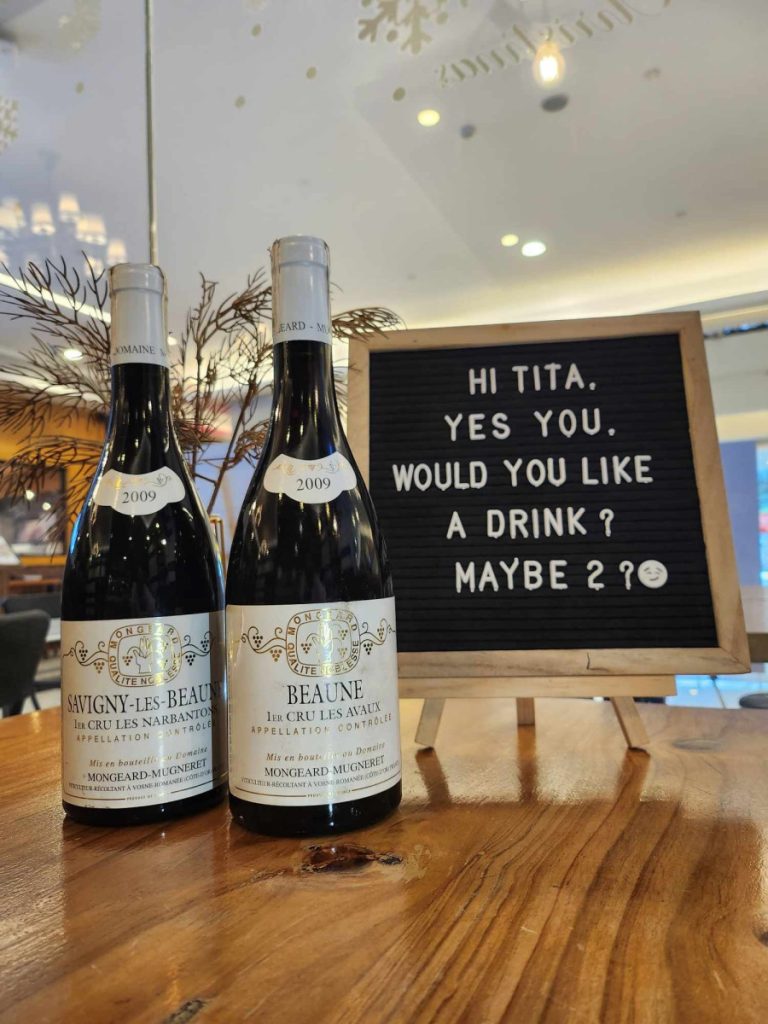
The Wines: Mongeard-Mugneret Savigny-les-Beaune 1er Cru Les Narbanton, and Beaune 1er Cru Les Avaux
Why: I have a special place in my heart for Beaune, the first wine region my husband Chad and I went to (during our honeymoon at that… Hardcore). Both wines are 1er (premier) cru, which is a notch above the simpler region commune/village (very simply put, those that don’t say 1er/premier or grand cru). Savigny-les-Beaune is (again, simplifying here) a fantastic example of double-barreled names that lend a certain prestige to otherwise “simple” village wines. Nevertheless, both these beauties are complex Pinot Noir, which are great to drink on their own (not literally – bottles like these are best shared ;)). Trivia: “Avaux” means “downstream” in French.
The Wines: Gilles Morat Pouilly-Fuissé, Sur La Roche, and Bélmnites
Why: Pouilly-Fuissé is an excellent appellation for people who are looking for a rich, complex style of Chardonnay (with a touch of Burgundian finesse, IMHO). “Sur la roche” means “under the rock,” named so because the grapes were harvested from vines located southwest of the famous Vergisson rock… a picturesque limestone peak in Saône-et-Loire. Bélemnites are fossil bullets (specifically the belemnite rostra), which is present in the vineyard. So yes, I liked these because it appealed to both my palate and my wannabe Francophone sensibilities.

The Wines: Mongeard-Mugneret Nuits-St-Georges, and Nuits-St-Georges “Les Plateaux”
Why: Nuits-St-Georges is one of the key villages in the Côte de Nuits, taking its name from their patron saint Saint Georges. Apart from the saintly namesake, it’s a great appellation to get fuller, more mature Pinot Noir. This is the Pinot Noir I’d pair with greasy, rich food… I’d drink this with James and Daughters’ duck confit. Feeling fancy? Get the Les Plateaux, which comes from a more specific plot (i.e, better nutrient concentration on the vine ergo higher quality).
The Wine: Château Terrey-Gros-Cailloux Cru Bourgeois Supérieur Saint-Julien
Why: I admit to having a shallow reason for including this wine in my list… My geek side. I mean, it’s a stupendous, rich, heavy Cabernet Sauvignon dominant wine… but I also like that it’s a great teaching tool for Bordeaux labels. A Cru Bourgeois Supérieur is a label awarded to a wine from the Médoc region that has consistently been of superior quality in the last five vintages. It’s good to note that it gets included in the list through tasting – which, of course, is subjective… hence this label is a topic of debate for wine nerds. For the uninitiated, however, it means that people whose palates have developed in a more “sophisticated” way deemed this a stonking wine.

The Wine: Château Lécuyer Grand Vin de Bordeaux Pomerol
Why: One of the most expensive and legendary wines on earth, Château Petrus, is produced from Merlot grapes in the Pomerol region. Now, I can’t afford that bottle (personal trivia: my birthyear produced one of the best vintages of the wine), but I can afford this guy from the same region. Grand vin is an unregulated term that means it’s that château’s best wine.
The Wine: Château Les Grands Chenes Médoc Grand Bordeaux
Why: I love going through Bordeaux wine labels… I’m gonna quote my WSET3 textbook here to make sure I don’t miss out on facts: “The Médoc lies to the north of the city of Bordeaux… The northernmost part of Médoc is called the Bas-Médoc, and the wines from here are labelled simply, Médoc.” This fact sorts through the confusion of, for example, the fact that the label Cru Bourgeois Supérieur is used in the Médoc region, despite seeing it on a bottle of Saint-Julien. Again, Grand Bordeaux means the signature, better/best wine of the château. So yes, I chose this wine for the geek component. It’s good, rich, characterful wine too!
The Wine: Eulalie Cahors
Why: Why doesn’t anybody talk about Cahors in Manila? There’s more to Malbec beyond Argentina (not to belittle Argentinian Malbec, they’re damn good stuff too). Jonas and I bonded over carafes of the stuff in one of our favorite Parisian Sud-Ouest comfort food restaurants, Chez Papa. It’s a subtle, spicy take on a Malbec which goes well with roasts, foie gras, potatoes…
The Wine: Maison Benedetti Châteauneuf-du-Pape
Why: I adore wines with a story. My neanderthal French can dissect Châteauneuf-du-Pape like this… Château – castle, neuf – new, du – of the, Pape – Pope. New Castle of the Pope. According to my favorite wine book The Curious World of Wine (by the aptly named Richard Vine, PhD), the origin of the name involves a response to heavy taxes imposed on the French Catholic clergy. This caused a rift between the Vatican and King Philip IV, the latter of whom levied a 50% income tax on the said clergy. This caused Pope Boniface to excommunicate Philip in 1296. After the deaths of Pope Boniface and his successor Pope Benedict XI, King Philip and his nobles decided to create their own papacy and appointed Archbishop Bertrand de Goth of Gascony as Pope Clement V, with his new “Vatican Seat” in Avignon. They renamed the area as Châteauneuf-du-Pape, where it remained until 1376. In commemoration of this moment in history, they’ve since produced wines from this region with bottles that bear indentations mimicking a Pope’s hat. Châteauneuf-du-Pape wines are generally bold, powerful reds made from a myriad of “regal” red grapes, including Shiraz, Grenache, Mourvèdre, and Cinsault.
The Wine: Cuvée Longo Maï
Why: As a bit of a confession, I gotta admit that finding literature on wines from the Saint-Jeannet area (close to Monaco and Nice) is sparse at best. The winemakers of this wine, however have a long history dating back 2000 years (with the ruins of an ancient wine press to bear witness to said history). More recent history talks about the winemaker’s father deciding to plant Merlot, Syrah, Mourvèdre, Grenache, Gamay, and Cabernet Sauvignon in his Saint-Jeannet vineyards. The wine is unique in that the current winemaker, Georges Rasse, decided to employ ancient methods involving oak aging under the sun to encourage oxidation… giving the wines a distinctive spicy, nutty flavor profile.
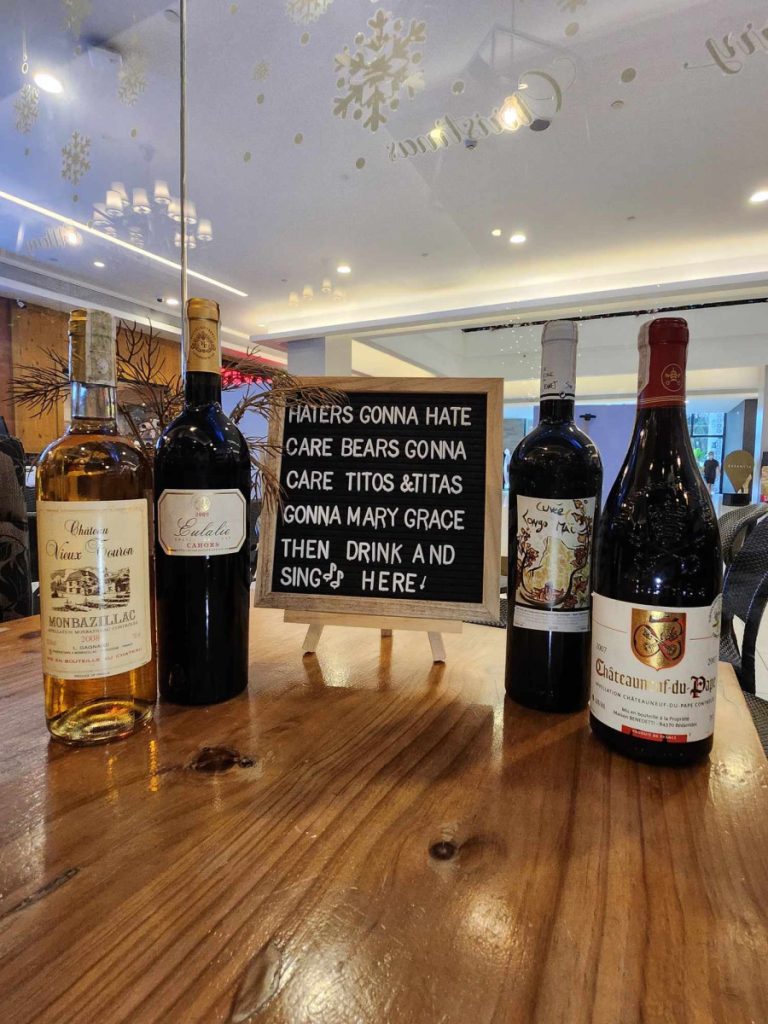
The Wine: Château Vieux Touron Monbazillac
Why: Like any good meal, it’s best to end this article with dessert… Dessert wine, that is. Monbazillac is a dessert wine produced in its region’s namesake, on the left bank of Dordogne in Southwest France. It is a botrytized wine, or a wine that has been affected by the noble rot… Which is when the fungus botrytis cinerea punctures a hole on the skin of the grapes, allowing the water to evaporate and leaving behind concentrated sugars. It’s saccharine, syrupy sweet wine, golden in color, and has flavors of apricots and marmalade. I’d pair it with pungent, soft cheese (like blue cheese), or even James and Daughters’ Suman ni Hasset. When people talk about French noble rot wines, they naturally think of the legendary Sauternes AOC, but hey… It can be pricey. A Monbazillac is a great, comparatively inexpensive alternative to get acquainted with the style.


